Do Happy Lights Impact Mental Health?

MiBlue Daily: Your Source for Health and Blue Cross Blue Shield of Michigan News.
The intent of happy lights – also known as light therapy lights or light therapy boxes – is to mimic sunlight. Happy lights are designed to reset your internal clock and trick your body into thinking it is absorbing the kind of intense light that a household light can’t provide.
Researchers have found light therapy can cause a chemical change in the brain that can brighten your mood. Seasonal Mood Disorder (SMD), triggered by a change of seasons, is a form of depression that sets in when days get shorter during the fall and winter. The disorder can make people feel sluggish, depressed, and low on energy, while affecting their appetite and sleep schedule. Happy lights work to nullify those symptoms.

Do happy lights work?

Before buying a happy light, you should consult with your primary health care provider. If you have bipolar disorder, increasing the exposure of a happy light too fast or using it for an extended period in one sitting could trigger manic symptoms.
You don’t need a prescription to buy a happy light but getting a medical opinion can help you find the happy light that is right for you, if it is an advisable option at all. Discussing light therapy with a doctor or a mental health specialist can also help you minimize potential side effects, like eyestrains, nausea, irritability or headaches.
If your doctor signs off on light therapy, a happy light could be beneficial for any symptoms you may have. Studies have found that while light therapy isn’t likely to cure your SMD, it is an effective way to treat it. For some people living with the disorder, it can act as a medication replacement or supplementary form of medication. Happy lights can also be used to treat jet lag and help get your sleep cycle back on track if it has been disrupted.
According to the Mayo Clinic, happy lights and light therapy can increase the effectiveness of antidepressant medication or mental health counseling. In some cases, they can allow you to take a lower dose of antidepressant medication. Happy lights use full spectrum white lights void of any UV radiation, so if you have psoriasis or take medications that increase your sensitivity to light, you should still be safe to use these products.

How to use a happy light

Light intensity, timing and duration are the three key elements to consider when measuring a happy light’s level of effectiveness. The intensity of the light box is recorded in lux, which is a measure of the amount of light you receive. For SMD, the typical recommendation is to use a 10,000-lux light that is about 16 to 24 inches away from your face. With a 10,000-lux light box, light therapy typically involves daily sessions of about 20 to 30 minutes, while a lower-intensity light box, such as 2,500 lux, may require longer sessions.
Light therapy sessions are typically most effective in the morning, according to a National Library of Medicine study. But whichever time of day you and your doctor choose, you should meticulously stick to undergoing light therapy at the same time every day for the best results. A consistent sleep and wake schedule, including on weekends, complements your light therapy sessions, as well.

Happy light therapy options

Before you buy, consider happy light settings like portability, horizontal and vertical placement versatility, cord length, brightness settings and noise level. Many of the most popular happy lights are available for between $30 and $200.
Are you looking to buy a happy light this winter? If your primary care provider recommends a happy light for medicinal treatment purposes, find out if your Blue Cross Blue Shield of Michigan plan covers the partial or entire cost of the purchase.

Clarification on “Vehicle Tax Relief” for Disabled Veterans

The Department of Veterans Affairs provides reminders to disabled veterans and their surviving spouses about eligibility for certain tax, license or fee-related benefits. This occasionally leads to questions about tax on vehicles.

Following a request from a dealer for clarification on “vehicle tax relief” benefits, MADA reached out to the Michigan Department of Treasury to confirm that Michigan does not provide a sales/use tax exemption on a vehicle purchased by a disabled veteran or his/her surviving spouse.

However, some specialty plates issued by the Secretary of State are eligible for free vehicle registration. Disabled veteran (DV) plates are included in this group.

The Michigan Vehicle Code provides an exemption from ad valorem taxes collected as part of vehicle registration for certain plates, which must be processed through an SOS branch. The tax exemption does not extend to all veterans, nor does it allow a vehicle to be purchased tax-free.

For more information on this topic see the Michigan Vehicle Code:

  • 803f Special registration plates for totally disabled veterans and surviving spouses
  • 801 Registration taxes on vehicle; schedules; exemption from ad valorem taxes on vehicles

Michigan Dealers Recognized for Community Service

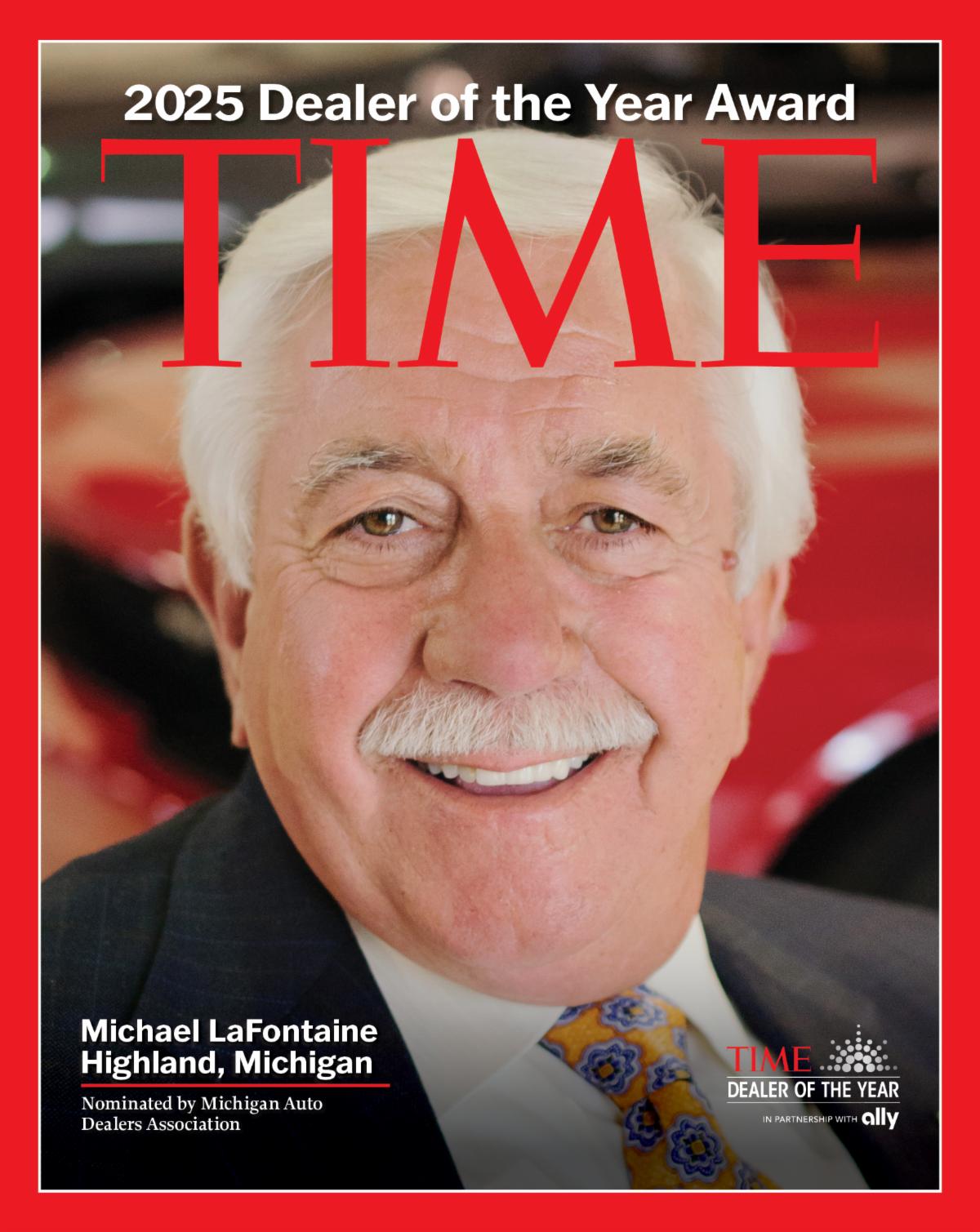
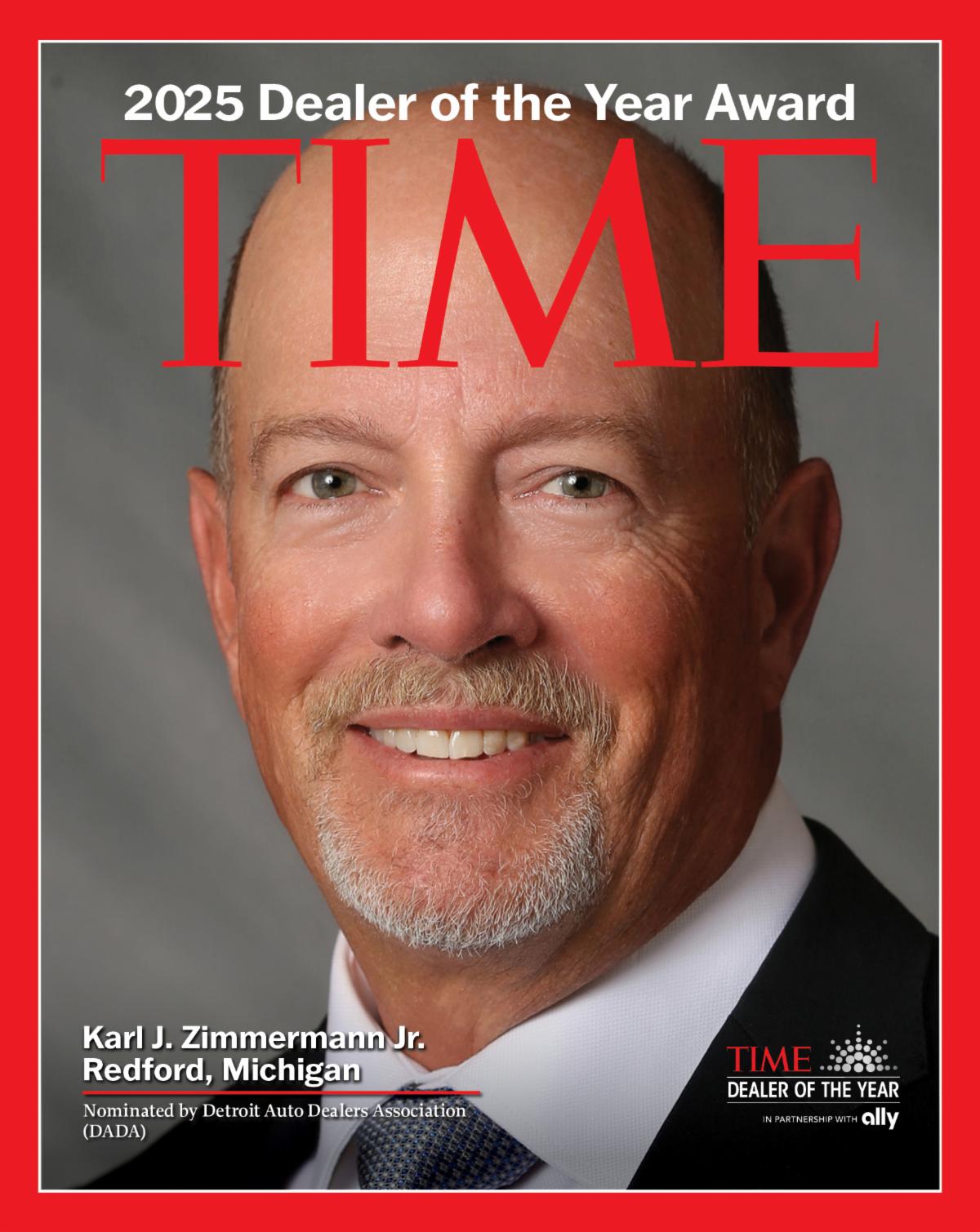
The TIME Dealer of the Year program honors new-car dealers in America who exhibit exceptional performance in their dealerships and perform distinguished community service. Dealers are nominated by members of the ATAE (Automotive Trade Association Executives) and the winner is acknowledged at the annual NADA Show.

This year, Michigan was represented by Michael LaFontaine (MADA nominee) and Karl Zimmermann Jr. (DADA nominee).

LaFontaine Automotive Group includes more than 55 retail franchises, 10 collision centers, and 41 retail locations across Michigan, employing more than 2,800 people.

LaFontaine’s philanthropic efforts reflect his mission to value relationships over transactions. “We strive to create real, tangible change in people’s lives by helping to build strong, healthier communities and by supporting those who may not have had the same opportunities,” he said.

Zimmermann oversees the Matick Automotive Group, which includes George Matick Chevrolet, Matick Toyota and Matick Buick GMC, all in the metro Detroit area.

“It’s been a wonderfully rewarding ride,” he said. “I am energized by our daily interactions and impact on our customers, our passionate involvement and generosity in our region, our investment in employees, and our commitment to the long-term viability of our dealership for our next generation of leadership.”

Northwood Honors Industry Leaders

Northwood University honored a special group of industry leaders during a Dealer Education Awards Breakfast during the NADA Show in New Orleans, Louisiana.

“These exceptional leaders have significantly shaped the automotive retail industry and exemplify the values of hard work, innovation, and integrity,” said Dr. Matt Bennett, vice president of enrollment, strategic alliances, and the Center for Automotive & Mobility Studies at Northwood University.

Michigan honorees include:

  • Terry Burns, former executive vice president, Michigan Automotive Dealers Association (Lifetime Achievement Award recipient)
  • John M. Leese, president/owner, Harvey Automotive, Grand Rapids, Michigan

Additionally, Diane Maher was named the Barbara Cox 2025 Woman of the Year. Maher is president and chief strategy officer for DP Fox Ventures LLC, and president and chief operating officer of Fox Motor Group.

More than 30 Northwood University students attended this year’s NADA Show, which is touted as the auto industry event of the year.

“To have 34 students in attendance at the 2025 NADA Show is a testament to Northwood’s enduring relationship with the industry, as many of the students who went to New Orleans were sponsored by companies within the automotive world,” noted Elgie Bright, chair of Northwood University’s automotive marketing and management degree program, which is part of the Center for Automotive & Mobility Studies at Northwood University…read more