
Stay Ahead in Compliance: ComplyAuto’s Webinar Offerings for Dealers

ComplyAuto is an all-in-one compliance management platform built specifically for automotive dealerships. It helps dealerships stay ahead of ever-changing regulatory requirements with tools designed to simplify, automate, and centralize compliance processes.

ComplyAuto is hosting two upcoming webinars for all dealers across the US. These will provide valuable compliance information, whether or not your dealership subscribes to the platform.

The End of Kicked Deals: Meet the DealCheck AI Changing F&I Forever
Thursday, April 17, 2025, at 2:00 PM EDT
Discover how AI is eliminating deal risk and compliance headaches in seconds—not hours. Whether you’re a GM, GSM, or in F&I, this session is packed with real-world insights and live demos that will change how you close deals forever. Register Now!

Class Actions on The Rise: Cookie Compliance Risk Analysis Is Changing
Wednesday, May 7, 2025, at 2:00 PM EDT
Class actions are on the rise. Learn the latest litigation trends, including CIPA, CCPA, UDAP, and other claims, with a focus on the massive increase in class-action claims targeting faulty or deceptive cookie banners. Register Now!
 

The Psychology of Making a Big Lifestyle Change

MiBlue Daily: Your Source for Health and Blue Cross Blue Shield of Michigan News. 
Making changes to our routines is hard – even when it’s for the sake of our long-term health and well-being.
Many of us use the turn of the year and New Year’s resolutions to commit to major lifestyle changes. Obviously, you can create steps and develop the habits needed to make a lifestyle change any time of the year. But sticking to those healthy habits while trying to break bad ones can be a major challenge.
But why is changing our behavior to create new healthy habits so hard? What does it take to actually change, and how long does it take to form a habit? We dive into those questions below, with the help of an expert.

Unhealthy habits and chronic conditions

The importance of healthy habits is well documented. Some of the biggest chronic conditions in the U.S. are directly linked to behaviors and lifestyle choices.
Over the years, lifestyle factors like not being active enough, not getting enough sleep, not eating a balanced, nutritious diet, using tobacco products and excessive alcohol use can lead to life-long health issues, according to the U.S. Centers for Disease Control and Prevention (CDC). These can include some chronic conditions like diabetes, heart disease and some cancers.
Along the way, there may be warning signs: obesity, high blood pressure, high cholesterol and elevated blood sugar levels, which can be signs of prediabetes.
Prediabetes can eventually lead to type 2 diabetes – yet, it can be reversed with small lifestyle changes; like losing 5% to 7% of your body weight, according to the CDC. That’s 10 to 14 pounds for a 200-pound person. Additional lifestyle changes can lower your risk of type 2 diabetes by 58%.

Overcoming ourselves

What gets in the way of healthy behaviors? What gets in the way of change?
Often, commitments adults accumulate in their lives can often take precedence over their own health. For others, their lifestyle habits and behaviors stem from what they learned as children. If processed foods and fast foods were the norm growing up, it’s more likely that those behaviors will continue into adulthood. Unlearning these ingrained habits is difficult.
Additionally, for some adults, there are more pressing concerns to provide for themselves and their families, including socioeconomic factors; some people can’t afford to make these lifestyle changes.
In addition to these factors, the hurdles we set for ourselves as we seek to make healthy changes are often so tall it seems often impossible to even begin. Our goals are too big; too intense.
Many people start making lifestyle changes for a short-term goal, like losing weight for a big event. But the short-term goal often comes with a short-term mindset of restricted diet habits and intense exercise – which can’t be sustained for a long period of time.
“We set ourselves up for failure,” said Angela Moore, NASM Master Trainer, Performance Enhancement Specialist (PES), Corrective Exercise Specialist (CES) and Fitness Nutrition Specialist (FNS) through the National Academy of Sports Medicine, as well as a Limited License Professional Counselor. She works with people looking to make healthy lifestyle changes for a living.
“When we first start exercising or restart an exercise program that we stopped, we often do too much which leads to extreme soreness and excessive fatigue which makes exercise extremely uncomfortable. Exercise can at times be uncomfortable but should never be unsafe,” Moore said. “Any exercise program that you choose should be something that you can safely do now and as you move forward in your health journey.”
Moore said people seeking a change need to change their mindset to – “how should I exercise and eat healthy now and for the rest of my life, so I can be healthy always?”
“Until you’re willing to do that, you’re only going to get short-term results,” Moore said.
keep reading…

Color Change for Salvage / Branded Titles

The Michigan Department of State distributed a dealer bulletin regarding an upcoming title stock change. Please ensure employees who may come in contact with salvage and/or branded titles are aware of this information…


Starting in April 2025, the title stock currently used for all salvage and/or branded titles (“orange” titles) will be replaced by titles with a new gray-and-yellow color scheme on the front and back of the title.

Orange titles will continue to be circulated until that stock is depleted. The color change is necessary as it will assist individuals with visual impairments.

Please look for the yellow to identify the new title stock.

Dealers Elected to MADA’s South District

Please join us in congratulating the following dealers who were recently elected to represent the South District on the MADA Board of Directors.


Matt Kool | Kool Automotive Group, Grand Rapids

Matt Kool is the newest member of the MADA Board of Directors. He is a third-generation dealer, and dealer principal at Kool Chevrolet and Kool Toyota in Grand Rapids, and Freedom Chevrolet in Fremont. As one of the “next-gen” dealers on the board, he brings valuable insight and a fresh perspective that will benefit MADA and its members.


Dave Kring | Dave Kring Chevrolet, Petoskey

We are very pleased to welcome Dave Kring back to the MADA board. Mr. Kring served as MADA president in 2005, and his continued involvement and leadership have been invaluable to MADA’s long-term progress. With his son now managing many of the dealership’s daily operations, Mr. Kring is again providing his guidance and many years of experience to the MADA board and Michigan dealers.


Ralph Shaheen | Shaheen Chevrolet Cadillac, Lansing

Ralph Shaheen has been supporting MADA in various board and committee positions for four decades. He has served under three MADA executive vice presidents and seen first-hand how this association has grown into one of the most effective business advocacy groups in the state. His knowledge and experience continue to be invaluable assets to MADA’s strategic growth.


Jeff Williams | Williams AutoWorld, Lansing

Also reelected to the board is Jeff Williams, dealer at Williams Subaru Hyundai in Lansing and Williams Volkswagen Audi in Okemos. Mr. Williams is an advocate of programs that strengthen the association and support members. His regular involvement and participation in board meetings and committee discussions have been instrumental in shaping policies that benefit the association.


We thank this group of dealers for sharing their time, experience and knowledge

Do Happy Lights Impact Mental Health?

MiBlue Daily: Your Source for Health and Blue Cross Blue Shield of Michigan News.
The intent of happy lights – also known as light therapy lights or light therapy boxes – is to mimic sunlight. Happy lights are designed to reset your internal clock and trick your body into thinking it is absorbing the kind of intense light that a household light can’t provide.
Researchers have found light therapy can cause a chemical change in the brain that can brighten your mood. Seasonal Mood Disorder (SMD), triggered by a change of seasons, is a form of depression that sets in when days get shorter during the fall and winter. The disorder can make people feel sluggish, depressed, and low on energy, while affecting their appetite and sleep schedule. Happy lights work to nullify those symptoms.

Do happy lights work?

Before buying a happy light, you should consult with your primary health care provider. If you have bipolar disorder, increasing the exposure of a happy light too fast or using it for an extended period in one sitting could trigger manic symptoms.
You don’t need a prescription to buy a happy light but getting a medical opinion can help you find the happy light that is right for you, if it is an advisable option at all. Discussing light therapy with a doctor or a mental health specialist can also help you minimize potential side effects, like eyestrains, nausea, irritability or headaches.
If your doctor signs off on light therapy, a happy light could be beneficial for any symptoms you may have. Studies have found that while light therapy isn’t likely to cure your SMD, it is an effective way to treat it. For some people living with the disorder, it can act as a medication replacement or supplementary form of medication. Happy lights can also be used to treat jet lag and help get your sleep cycle back on track if it has been disrupted.
According to the Mayo Clinic, happy lights and light therapy can increase the effectiveness of antidepressant medication or mental health counseling. In some cases, they can allow you to take a lower dose of antidepressant medication. Happy lights use full spectrum white lights void of any UV radiation, so if you have psoriasis or take medications that increase your sensitivity to light, you should still be safe to use these products.

How to use a happy light

Light intensity, timing and duration are the three key elements to consider when measuring a happy light’s level of effectiveness. The intensity of the light box is recorded in lux, which is a measure of the amount of light you receive. For SMD, the typical recommendation is to use a 10,000-lux light that is about 16 to 24 inches away from your face. With a 10,000-lux light box, light therapy typically involves daily sessions of about 20 to 30 minutes, while a lower-intensity light box, such as 2,500 lux, may require longer sessions.
Light therapy sessions are typically most effective in the morning, according to a National Library of Medicine study. But whichever time of day you and your doctor choose, you should meticulously stick to undergoing light therapy at the same time every day for the best results. A consistent sleep and wake schedule, including on weekends, complements your light therapy sessions, as well.

Happy light therapy options

Before you buy, consider happy light settings like portability, horizontal and vertical placement versatility, cord length, brightness settings and noise level. Many of the most popular happy lights are available for between $30 and $200.
Are you looking to buy a happy light this winter? If your primary care provider recommends a happy light for medicinal treatment purposes, find out if your Blue Cross Blue Shield of Michigan plan covers the partial or entire cost of the purchase.

Clarification on “Vehicle Tax Relief” for Disabled Veterans

The Department of Veterans Affairs provides reminders to disabled veterans and their surviving spouses about eligibility for certain tax, license or fee-related benefits. This occasionally leads to questions about tax on vehicles.

Following a request from a dealer for clarification on “vehicle tax relief” benefits, MADA reached out to the Michigan Department of Treasury to confirm that Michigan does not provide a sales/use tax exemption on a vehicle purchased by a disabled veteran or his/her surviving spouse.

However, some specialty plates issued by the Secretary of State are eligible for free vehicle registration. Disabled veteran (DV) plates are included in this group.

The Michigan Vehicle Code provides an exemption from ad valorem taxes collected as part of vehicle registration for certain plates, which must be processed through an SOS branch. The tax exemption does not extend to all veterans, nor does it allow a vehicle to be purchased tax-free.

For more information on this topic see the Michigan Vehicle Code:

  • 803f Special registration plates for totally disabled veterans and surviving spouses
  • 801 Registration taxes on vehicle; schedules; exemption from ad valorem taxes on vehicles

Michigan Dealers Recognized for Community Service

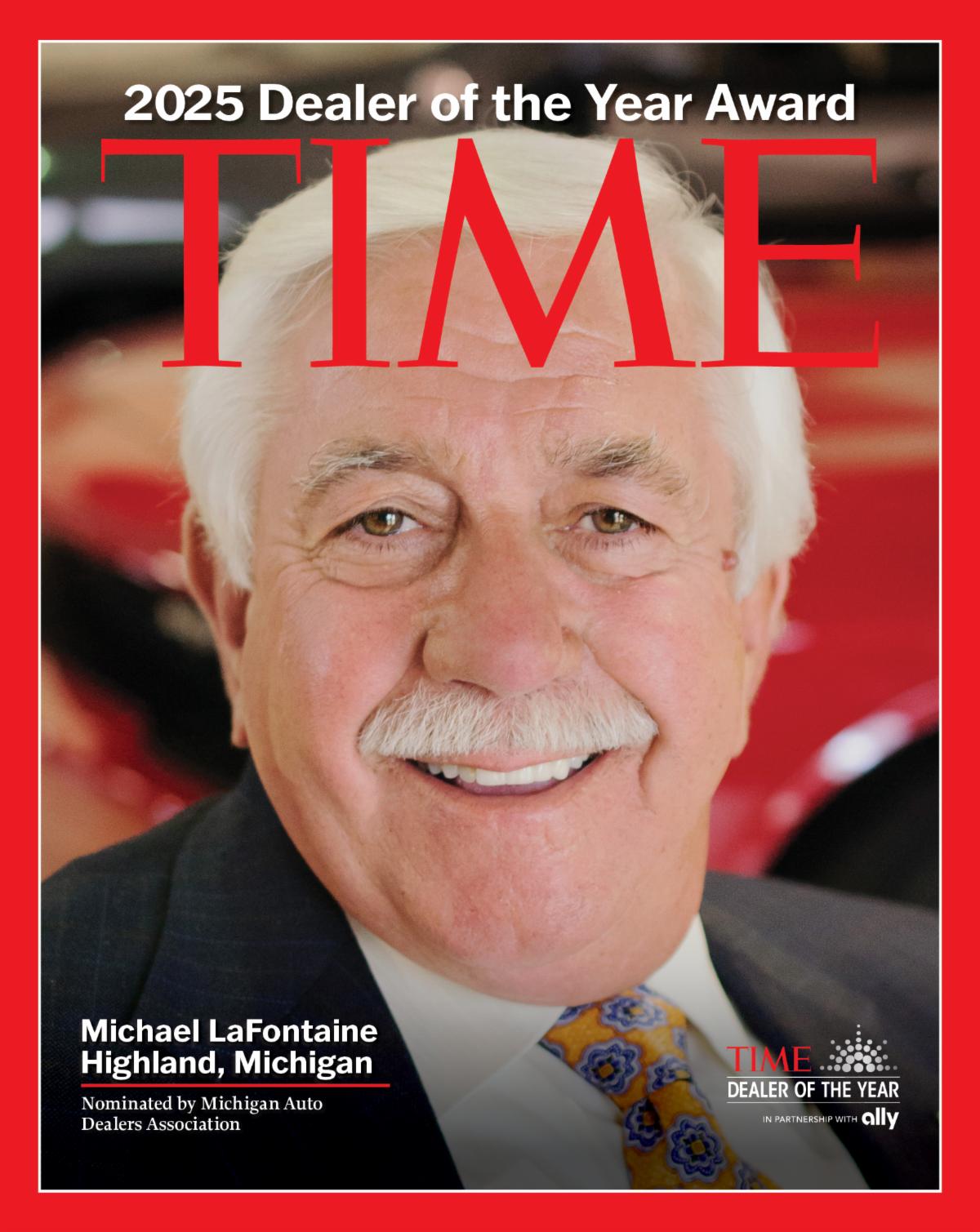
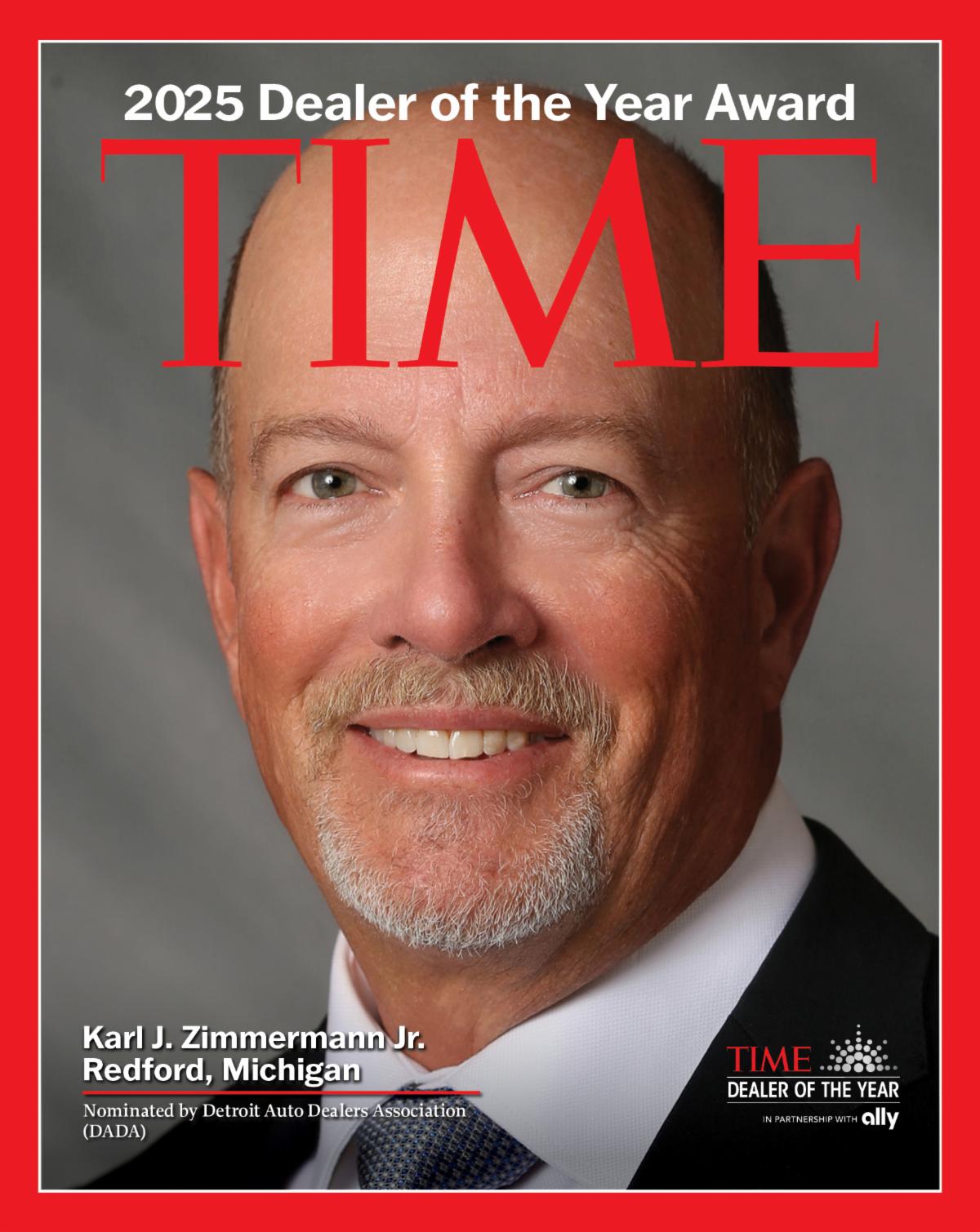
The TIME Dealer of the Year program honors new-car dealers in America who exhibit exceptional performance in their dealerships and perform distinguished community service. Dealers are nominated by members of the ATAE (Automotive Trade Association Executives) and the winner is acknowledged at the annual NADA Show.

This year, Michigan was represented by Michael LaFontaine (MADA nominee) and Karl Zimmermann Jr. (DADA nominee).

LaFontaine Automotive Group includes more than 55 retail franchises, 10 collision centers, and 41 retail locations across Michigan, employing more than 2,800 people.

LaFontaine’s philanthropic efforts reflect his mission to value relationships over transactions. “We strive to create real, tangible change in people’s lives by helping to build strong, healthier communities and by supporting those who may not have had the same opportunities,” he said.

Zimmermann oversees the Matick Automotive Group, which includes George Matick Chevrolet, Matick Toyota and Matick Buick GMC, all in the metro Detroit area.

“It’s been a wonderfully rewarding ride,” he said. “I am energized by our daily interactions and impact on our customers, our passionate involvement and generosity in our region, our investment in employees, and our commitment to the long-term viability of our dealership for our next generation of leadership.”

Northwood Honors Industry Leaders

Northwood University honored a special group of industry leaders during a Dealer Education Awards Breakfast during the NADA Show in New Orleans, Louisiana.

“These exceptional leaders have significantly shaped the automotive retail industry and exemplify the values of hard work, innovation, and integrity,” said Dr. Matt Bennett, vice president of enrollment, strategic alliances, and the Center for Automotive & Mobility Studies at Northwood University.

Michigan honorees include:

  • Terry Burns, former executive vice president, Michigan Automotive Dealers Association (Lifetime Achievement Award recipient)
  • John M. Leese, president/owner, Harvey Automotive, Grand Rapids, Michigan

Additionally, Diane Maher was named the Barbara Cox 2025 Woman of the Year. Maher is president and chief strategy officer for DP Fox Ventures LLC, and president and chief operating officer of Fox Motor Group.

More than 30 Northwood University students attended this year’s NADA Show, which is touted as the auto industry event of the year.

“To have 34 students in attendance at the 2025 NADA Show is a testament to Northwood’s enduring relationship with the industry, as many of the students who went to New Orleans were sponsored by companies within the automotive world,” noted Elgie Bright, chair of Northwood University’s automotive marketing and management degree program, which is part of the Center for Automotive & Mobility Studies at Northwood University…read more

MIOSHA Compliance Training

The Michigan Occupational Safety and Health Administration (MIOSHA) has recently hired over 60 new inspectors, and inspections are on the rise. As a result, fines for non-compliance are becoming increasingly aggressive. It’s crucial that all dealerships prioritize safety, not only to protect employees but also to avoid costly citations and penalties. MADA members are invited to join us for a complimentary member training program to help your dealership maintain compliance.

MADA Dealership Education Series: MIOSHA Compliance Training
February 27, 2025  |  9:00 am – 12:00 pm
In-person training at the MADA Office (East Lansing)

Speaker: Ken Smylie | VP Loss Control, MADSIF

This training program is designed to equip dealership staff with the knowledge and tools needed to establish a strong safety culture, which will help your dealership prevent injuries and stay in compliance with MIOSHA regulations.

Discussion topics:

  • Common MIOSHA Violations: Learn about the most frequently cited safety violations, and how to avoid them.
  • Identifying Hazards: Understand how to identify unsafe acts and hazardous facility conditions.
  • Employee Safety Training: Discover how to implement effective training programs for your team that ensure everyone understands safety protocols and procedures.
  • Safe Equipment Operation: Gain insight on proper equipment operation and handling of hazardous materials.
  • Signage & Labeling Requirements: Learn about required and recommended safety signage to keep your workplace informed and compliant.

Q&A will follow the presentation, giving you the opportunity to ask questions specific to your dealership’s needs.

Registration link: https://forms.office.com/r/cB4ZAPDpqn